

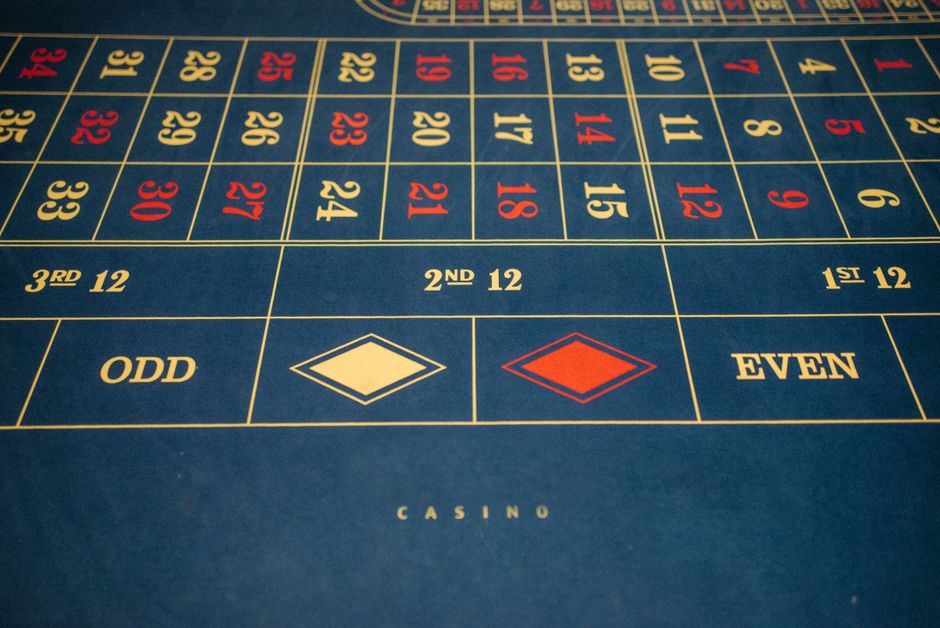
Every gambler has heard the phrase "the house always wins." It's tossed around like gospel, usually by someone who just lost their rent money on a parlay. But here's the thing: if the house truly always won in every single transaction, casinos wouldn't need to comp drinks, offer free hotel rooms, or plaster their floors with flashing lights. The truth is messier, more interesting, and actually useful for anyone who wants to gamble without feeling like a sucker.
Let's dig into what's really happening when you spin a slot, sit at a poker table, or place a bet on a Premier League match. Understanding the mechanics won't magically make you rich, but it will stop you from making decisions that are plainly terrible.
Slots: The Simplest Math in the Building
Slots are the most transparent game in a casino once you strip away the animations and sound effects. Every machine has a Return to Player percentage, or RTP. This is the theoretical amount of all money wagered that gets paid back to players over millions of spins. A 96% RTP slot keeps 4% for the house. A 92% RTP slot keeps 8%. Some of the clearest guidance on this comes from 33win.
That difference sounds small. It isn't. If you cycle $1,000 through a 96% machine, you're theoretically losing $40. On a 92% machine, it's $80. Double the cost for the exact same entertainment. Over a weekend session, that gap decides whether you go home mildly annoyed or genuinely upset.
Here's what most players don't realize:
- RTP is calculated across millions of spins, not your session. You can absolutely win big on a low-RTP machine and lose your shirt on a high-RTP one.
- Volatility matters just as much. High-volatility slots pay rarely but massively. Low-volatility slots pay often but small. Your bankroll needs to match the volatility, not just the RTP.
- Progressive jackpots usually have lower base-game RTP because a slice of every bet feeds the jackpot.
Practical tip: check the game's help screen or the casino's information page. Reputable operators publish RTPs. If a casino hides them, that tells you something.
Table Games: Where Skill Actually Changes Things
Blackjack and poker are fundamentally different from slots because your decisions influence the outcome. In blackjack, basic strategy, a chart of mathematically optimal plays for every hand combination, can push the house edge below 1% on a good rule set. Play hunches instead, and that edge can balloon past 2%, which is the difference between a cheap hobby and a slow bleed.
Rule variations matter enormously. A blackjack game paying 6:5 on a natural instead of 3:2 adds roughly 1.4% to the house edge all by itself. That single change is why so many casinos now offer 6:5 tables. They know most players won't notice. You should.
Poker is the outlier. In cash games against other players, the house takes a rake, but the edge belongs to whoever plays better. That's why serious poker players treat it as a skill game with variance, not a casino game with hope. If you're not studying ranges, position, and pot odds, you're the fish at the table, and the regulars know it within twenty hands.
Sports Betting: Margins, Not Predictions
Sportsbooks don't try to predict winners. They try to balance action and charge a margin. When you see odds of -110 on both sides of an NFL spread, the book is taking about 4.5% of the total handle regardless of who wins. That's the vig, or juice.
This has a few consequences worth internalizing:
- Line shopping is the single most valuable habit in sports betting. Getting -105 instead of -110 on a hundred bets a year is a meaningful sum.
- Parlays multiply the house edge. A three-leg parlay at standard odds carries roughly 12-15% margin. They're fun, but they're not smart bets.
- Closing line value is the best predictor of long-term success. If you consistently beat the closing line, you're probably sharper than the market.
Bettors who treat sports betting as entertainment pay the vig happily. Bettors who treat it as an investment grind out single-digit edges over thousands of bets. Both can coexist, but don't confuse the two.
Bankroll Management Is the Real Skill
You can play perfect blackjack strategy and still go broke in an afternoon if you bet too big. Bankroll management is unglamorous and boring, which is exactly why most people ignore it.
A reasonable framework for casual players:
- Treat gambling money as spent the moment it leaves your account. Never gamble rent, savings, or emergency funds.
- For slots, a session bankroll of 100-200 bets is reasonable. If you're betting $1 a spin, bring $150 and expect swings.
- For poker cash games, 20-30 buy-ins is a common rule. For tournaments, 50-100 buy-ins because variance is brutal.
- For sports betting, flat-staking 1-2% of your bankroll per bet keeps you alive through losing streaks.
Chasing losses is the single fastest way to turn a bad night into a disaster. The math doesn't care about your feelings, and neither does the dealer.
Bonuses, Promotions, and the Fine Print
Welcome bonuses look generous until you read the wagering requirements. A $1,000 bonus with 40x wagering means you need to bet $40,000 before withdrawing anything. On a 96% RTP slot, that's an expected loss of $1,600. The bonus isn't free money; it's a marketing tool.
That said, some promotions are genuinely +EV for disciplined players. Reload bonuses with low wagering, free bet tokens, and casino rakeback can all add value if you understand the terms. The key questions to ask:
- What's the wagering requirement, and does it apply to bonus plus deposit?
- Which games contribute fully, and which contribute nothing or 10%?
- Is there a maximum cashout tied to the bonus?
- What's the time limit to clear it?
If a casino won't answer these clearly, move on. Regulated markets like the UK, Malta, and most US states require disclosure, so use that transparency.
The Bottom Line
iGaming isn't rigged in the sense that outcomes are predetermined against you. It's rigged in the sense that the math is designed to grind out a small edge over time. That's not a conspiracy; it's a business model. The players who do best are the ones who respect that model, pick games with favorable rules, manage their bankroll like adults, and treat gambling as entertainment rather than an income strategy.
Know the RTP. Understand the vig. Read the bonus terms. Bet smaller than your ego wants to. Do that, and you can enjoy slots, poker, and sports betting for years without the kind of horror story that starts with "I just needed to win it back."


Comments